Wednesday, February 27, 2008

Inhumanity is harmful to every age.


Ante Diem III KALENDAS MARTIAS
MMDCCLXI AUC
27 February 2008


Nefastus Publicus: a day for public religious festivals


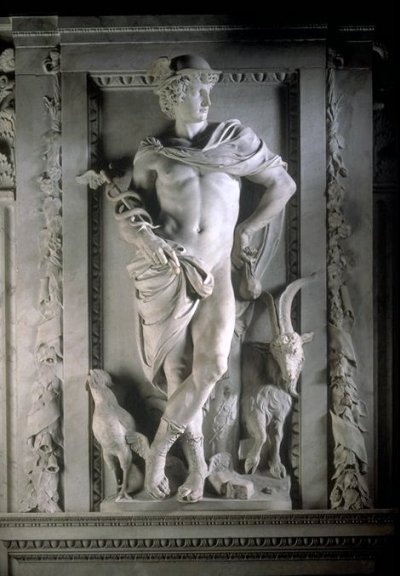
Dies Mercurii
Day of Mercury


Mercurius

Inhumanitas omni aetate molesta est.
Inhumanity is harmful to every age.

M. TVLLI CICERONIS CATO MAIOR DE SENECTVTE


This one quote of Cicero continues to haunt my mind each time I read it and use it in a blog. I believe that his words are as vital and vibrant as they were two millennia ago. There is another quote from George Santayana from the early part of this past century that has had the same impact upon me.

"Those who cannot remember the past are condemned to repeat it."
Life of Reason, Reason in Common Sense, Scribner's, 1905


Both of these quotes bring Martin Niemöller to mind who is credited for writing First They Came for the Jews though there still remains some controversy over its authorship. Yet that doesn't diminish the significance of these words to anyone of any age in the history of mankind.


First They Came for the Jews

First they came for the Jews
and I did not speak out
because I was not a Jew.

Then they came for the Communists
and I did not speak out
because I was not a Communist.

Then they came for the trade unionists
and I did not speak out
because I was not a trade unionist.

Then they came for me
and there was no one left
to speak out for me.

Pastor Martin Niemöller


Friedrich Gustav Emil Martin Niemöller (January 14, 1892 - March 6, 1984) was a prominent German anti-Nazi theologian and Lutheran pastor. He is best known as the author of the poem First they came....

Although he was a national conservative and initially a supporter of Adolf Hitler, he became one of the founders of the Confessing Church, which opposed the nazification of German Protestant churches. Despite his own anti-Semitic attitudes, he vehemently opposed the Nazis' Aryan Paragraph. For his opposition to the Nazi's state control of the churches, Niemöller was imprisoned in Sachsenhausen and Dachau concentration camps from 1937 to 1945. He narrowly escaped execution and survived imprisonment. After his imprisonment, he expressed his deep regret about not having done enough to help the victims of the Nazis. He turned away from his earlier anti-Semitic and nationalistic beliefs and was one of the initiators of the Stuttgart Declaration of Guilt. Since the 1950s, he was a vocal pacifist and anti-war activist, and vice-chair of War Resisters' International from 1966 to 1972. He met with Ho Chi Minh during the Vietnam War and was a committed campaigner for nuclear disarmament.

1976 Version of the Poem


Original


Als die Nazis die Kommunisten holten,
habe ich geschwiegen;
ich war ja kein Kommunist.

Als sie die Sozialdemokraten einsperrten,
habe ich geschwiegen;
ich war ja kein Sozialdemokrat.

Als sie die Gewerkschafter holten,
habe ich nicht protestiert;
ich war ja kein Gewerkschafter.

Als sie die Juden holten,
habe ich geschwiegen;
ich war ja kein Jude.

Als sie mich holten,
gab es keinen mehr, der protestieren konnte.


Translation


When the Nazis came for the communists,
I remained silent;
I was not a communist.

When they locked up the social democrats,
I remained silent;
I was not a social democrat.

When they came for the trade unionists,
I did not speak out;
I was not a trade unionist.

When they came for the Jews,
I remained silent;
I wasn't a Jew.

When they came for me,
there was no one left to speak out.


We live in an era where racial, religious, and political profiling is becoming too common place and individual rights and the dignity of humanity seem to have less importance and sanctity every day. We once had a Constitution in this country that guaranteed legal rights to citizens as well as anyone legally residing or traveling in the United States. When people speak of Rendition and Torture, it brings images to my mind of Hitler and National Socialism as well as Stalin and the Gulags of Soviet Communism. The tragic reality is that we are talking about the United States in the first decade of the twenty first century. Let us continue to remind ourselves of the words of Marcus Tullius Cicero and George Santayana.

EXTRAORDINARY RENDITION: Congressional Hearing Highlights


Senex Magister

It is past time to bring this war to an end and live as brothers in a world based on fairness for all of us.


Dissent is the highest form of Patriotism. ~Thomas Jefferson~


Bring Them Home

Tuesday, February 26, 2008

Natura Ipsa Sapientem Locupletat.


Ante Diem IV KALENDAS MARTIAS

MMDCCLXI AUC
26 February 2008)

Endotercisus: Dies Fastus a.m., Dies Comitialis p.m.

Dies Martis


Mensis Februarius


Originally, the last month of the year, February derives from 'februa" the instruments of purification that were used to propitiate the gods and prepare for Spring, which Varro indicates began on February 5.

NATURA IPSA SAPIENTEM LOCUPLETAT.
NATURE HERSELF MAKES THE WISE MAN RICH.


M. TVLLI CICERONIS DE FINIBVS BONORVM ET MALORVM


Cicero like Marcus Aurelius after him was a Stoic Philosopher, and he would have believed that the world was governed by law and reason. I suppose the question would be is what does Cicero mean when he says that "Nature herself will make a wise man rich"? Reason and Faith can become confused especially when they are misused in an attempt to keep us misinformed. Is my truth and reality simply a lie and a fantasy to someone else? I would never presume to be so dogmatic by maintaining that my view of the world is an absolute. Yet, when we see such glaring contradictions caused by 'Man' on this mater terra that we have been entrusted to care for. Have we addressed the social divide in this country that Katrina so clearly pointed out to us all?


Lest we forget!


The following appeared in the Washington Post this morning: NATO Confronts Surprisingly Fierce Taliban

In the year and a half since NATO took over southern Afghanistan from U.S. forces, its mission has changed dramatically. Dispatched to the region to maintain newly restored order and help local Afghans reconstruct their shattered communities, Dutch and other troops from the alliance now find themselves on the front lines of a renewed fight with a more cunning and aggressive Taliban.

More foreign soldiers and Afghan civilians died in Taliban-related fighting last year than in any year since U.S. and coalition forces ousted the extremist Islamic militia, which ruled most of the country, in 2001. Military officials here expect the coming year to be just as deadly, if not more so, as the Taliban becomes more adept militarily and more formidable in its deployment of suicide bombers and roadside explosives.

The Taliban's growing strength, which surprised Dutch forces here, helps explain why NATO members are reluctant to send more troops to an increasingly dangerous battlefield and have instead adopted a strategy based less on military force.

In his recent criticism of NATO's refusal to deploy more forces, Defense Secretary Robert M. Gates accused the alliance of being ill-prepared for counterinsurgency operations. NATO countries, however, while not opposed to the war effort in Afghanistan, have always viewed the key to success as one that relied on giving Afghans new schools, health clinics and other elements of a sturdy civil society.


We left Afghanistan to fight an ill conceived and unjust war in Iraq with a callous disregard to the victims of 9/11. The Central point and message that is so critical at this juncture can be seen in this last paragraph.


"NATO countries have always viewed the key to success as one that relied on giving Afghans new schools, health clinics and other elements of a sturdy civil society."

If we would have had the wisdom to do exactly this when Soviet troops were driven out of Afghanistan, there very well may never have been a 9/11. Like Charlie Wilson said, "We know how to start the game, but just don't seem to be able to finish it".


Charlie Wilson and Changing the World


I have no answers but it would be nice to think that it is possible.


Senex Magister


It is past time to bring this war to an end and live as brothers in a world based on fairness for all of us.


Dissent is the highest form of Patriotism. ~Thomas Jefferson~


Bring Them Home


Sunday, February 3, 2008

Bring Them Home

Bring Them Home


It is Super Bowl Sunday which has become almost a National Holiday or at least Day of Celebration. It is a day that has become much more than just the culmination of the National Football League's hugely profitable season. Team owners whether they are winners or losers continue to profit from America's obsession with the NFL. I will also admit that I fall victim to the same obsession every year. Many of us will gather today in our homes with family or friends to enjoy pre-game activities and then the ever anticipated (?) 'What was I going to say here'? Is it the game or the ever growing cost of Super Bowl Commercial time for whatever product? I am not necessarily saying this is a bad thing, but it is an example and reminder of 'American Greed'.


There is another example and reminder of the same kind of greed and that is the profitability that many American Companies have found in Iraq. I have remained very curious about the meetings that the Vice President had with our critically important 'Energy Corporations' in the early moments of the Bush Administration. Yet, they were deemed so sensitive that the Cheney-Bush Administration classified the discussions of those meetings. I think each of us should be asking ourselves 'why' especially within the context of the growing profits of these companies and then the invasion of oil rich Iraq. We can be given many reasons why we went to war and allowed ourselves to become a debtor nation, but there is only one answer that comes close to a sufficiently honest answer and that again is 'American Greed'.


We have important primaries on Tuesday but then candidates of both parties have not given me a clear enough answer about 'WHEN WILL THEY BRING ALL OUR MEN AND WOMEN HOME'. The Republican simply want to continue the failed policies of George W. Bush while the Democrats talk about ending the war but they are very fuzzy about exactly when.


RON PAUL - JUST BRING THEM HOME


I am not a supporter of Ron Paul's political philosophy of no government, but this is a good clip. It not only shows the futility of this struggle but those who are bearing the emotional and physical cost of this war. If the War in Iraq were truly a National Struggle where the children and grandchildren of CEO's of American Corporations as well as members of Congress were being placed in Harm's Way, do you believe this war would continue or would we 'Bring Them Home'?


Barack Obama wins South Carolina primary: Portrait of Obama


This is a clip of Barack Obama addressing Veterans as well as issues of people who simply have no voice. It is not just a tragedy but an unconscionable disgrace that we have Homeless Veterans in 2008.


Iraq War Support Our Troops Stop All War Profiteering


HILLARY CLINTON @ DNC: "I'll End This War"


Hilary Clinton like many others voted to give George W. Bush the authority to use military force against Iraq in 2002. If we are going to be fair to the senator, we must remember that she was deceived by faulty intelligence like so many others did. It was a mistake but it was one that was based on a lie.


The Democratic Party is putting forth two excellent candidates that will bring a change and a new direction to government in Washington. One of the most important changes that either one will do for this nation is 'Bring Them Home'. The decision will be difficult but whomever you choose it must be for a candidate who will 'Bring Them Home'.


Senex Magister


It is past time to bring this war to an end and live as brothers in a world based on fairness for all of us.


~Dissent is the highest form of Patriotism. ~Thomas Jefferson~


Bring Them Home


Saturday, February 2, 2008

The Media or Fourth Estate

I was speaking this morning with a friend of forty five plus years and our conversation, as it quite often does, led to politics and the current presidential campaigns. Neither of us really disagrees with one another about the importance of change in the White House and electing a President who will lead this country away from the failed policies of George W. Bush. This is why we both agree in how important a Democratic Victory in November is so essential for this critical change to occur in Washington. This led into a discussion over the recent controversy between Obama and Clinton on race and gender but especially concerning race. The media or what we used to refer to as the Fourth Estate, I believe, has attempted from the onset to created an environment of confrontation and controversy between candidates over apparent personal disagreements having nothing to do with the important political issues of the day. I also think it is very unfair to even intimate that either Bill or Hilary Clinton have a racist bone in their bodies. What far too many of us are doing is allowing the media to turn brother against brother. I was as opposed to the Vietnam War as I am to the Iraq War and in that sense I am much closer to Barack Obama’s position on the Iraq War. I would have no difficulty in supporting either candidate for President except for one serious caveat. I would hope that either an African American or a woman could run and be elected President of the United States in 2008. However, I am sadly fearful that this nation has not yet overcome the sin of racism and bigotry that has plagued us for so many years and still contributes to the social divide that separates us one from another. I am also saddened by the role that the media is playing in perpetuating this divide within the United States.


Senex Magister


BILL MOYERS JOURNAL | Clinton, Obama, King and Johnson | PBS


I Have A Dream


Civil Rights Act of 1964

In an 11 June 1963 speech broadcast live on national television and radio, President John F. Kennedy unveiled plans to pursue a comprehensive civil rights bill in Congress, stating, ‘‘this nation, for all its hopes and all its boasts, will not be fully free until all its citizens are free’’ (‘‘President Kennedy’s Radio-TV Address,’’ 970). King congratulated Kennedy on his speech, calling it ‘‘one of the most eloquent, profound and unequivocal pleas for justice and the freedom of all men ever made by any president’’ (King, 12 June 1963).

The earlier Civil Rights Act of 1957, the first law addressing the legal rights of African Americans passed by Congress since Reconstruction, had established the Civil Rights division of the Justice Department and the U.S. Civil Rights Commission to investigate claims of racial discrimination. Before the 1957 bill was passed Congress had, however, removed a provision that would have empowered the Justice Department to enforce the Brown v. Board of Education decision. A. Philip Randolph and other civil rights leaders continued to press the major political parties and presidents Dwight D. Eisenhower and John F. Kennedy to enact such legislation and to outlaw segregation. The civil rights legislation that Kennedy introduced to Congress on 19 June 1963 addressed these issues, and King advocated for its passage.

In an article published after the 1963 March on Washington for Jobs and Freedom that posed the question, ‘‘what next?’’ King wrote, ‘‘the hundreds of thousands who marched in Washington marched to level barriers. They summed up everything in a word—NOW. What is the content of NOW? Everything, not some things, in the President’s civil rights bill is part of NOW’’ (King, ‘‘In a Word—Now’’).

Following Kennedy’s assassination in November 1963, King continued to press for the bill as did newly inaugurated President Lyndon B. Johnson. In his 4 January 1964 column in the New York Amsterdam News, King maintained that the legislation was ‘‘the order of the day at the great March on Washington last summer. The Negro and his compatriots for self-respect and human dignity will not be denied’’ (King, ‘‘A Look to 1964’’).

The bill passed the House of Representatives in mid-February 1964, but became mired in the Senate due to a filibuster by southern senators that lasted 75 days. When the bill finally passed the Senate, King hailed it as one that would ‘‘bring practical relief to the Negro in the South, and will give the Negro in the North a psychological boost that he sorely needs’’ (King, 19 June 1964). On 2 July 1964, Johnson signed the new Civil Rights Act of 1964 into law with King and other civil rights leaders present. The law’s provisions created the Equal Employment Opportunity Commission to address race and sex discrimination in employment and a Community Relations Service to help local communities solve racial disputes; authorized federal intervention to ensure the desegregation of schools, parks, swimming pools, and other public facilities; and restricted the use of literacy tests as a requirement for voter registration.


Source: King Encyclopedia

Lyndon Baines Johnson (1908 – 1973)

President Johnson’s five years in office brought about critical civil rights legislation and innovative anti-poverty programs through his Great Society initiative, though his presidency was marred by mishandling of the war in Vietnam. Though Martin Luther King, Jr., called Johnson’s 1964 election “one of America’s finest hours,” and believed that Johnson had an “amazing understanding of the depth and dimension of the problem of racial injustice,” King’s outspoken opposition to the Vietnam War damaged his relationship with Johnson and brought an end to an alliance that had enabled major civil rights reforms in America (King, 4 November 1964; King, 6 March 1965).

Johnson was born in rural Texas on 27 August 1908. He graduated from Southwest Texas State Teachers College in 1930 and briefly taught in Texas public schools before becoming secretary to a Texas congressman in Washington, D.C. In 1937, Johnson was elected to serve out the term of a Texas representative who had died in office. In 1948, he was elected a senator, becoming Democratic whip, then minority leader. In 1954, Johnson became the second youngest man ever to be named Senate majority leader. From this position of power, Johnson used his political leverage to engineer passage of the 1957 and 1960 Civil Rights Acts.

When John F. Kennedy secured the Democratic Party’s presidential nomination in 1960, he surprisingly chose Johnson as his running mate, hoping the Texas senator would appeal to southern voters. Shortly after winning the election, Kennedy named Johnson chairman of the President’s Committee on Equal Employment Opportunity. With Johnson’s encouragement, on 11 June 1963, Kennedy framed civil rights in moral terms for the first time during a national address.

Following the assassination of President Kennedy on 22 November 1963, Johnson challenged Congress to pass the civil rights legislation that had been deadlocked at the time of Kennedy’s death. King publicly supported Johnson, saying that Johnson had taught him to recognize that there were “new white elements” in the South “whose love of their land was stronger than the grip of old habits and customs,” and expressed optimism that Johnson’s term would benefit African Americans (King, 1964).
On 2 July 1964 Johnson signed the Civil Rights Act of 1964, a far reaching bill he hoped would “eliminate the last vestiges of injustice in America” (Kenworthy, “President Signs Civil Rights Bill”). King stood behind Johnson as he signed the bill into law. A month later, they clashed over the recognition of delegates from the integrated Mississippi Freedom Democratic Party (MFDP) at the Democratic National Convention of 1964. MFDP sought recognition as the legitimate Democratic Party delegation from Mississippi instead of the all-white “regular” delegation. However, Johnson feared this change would cost him southern Democratic votes in the upcoming election against Republican Barry Goldwater, and recommended a compromise that King eventually supported.

Later that year, Johnson won a decisive victory in the 1964 election, garnering the widest popular margin in presidential history. King had campaigned actively for Johnson and welcomed the victory saying, “the forces of good will and progress have triumphed” (King, 4 November 1964). In the first months of Johnson’s elected term, King joined a voting rights campaign in Selma, Alabama, where less than two percent of eligible black voters had been able to register to vote. The brutality of white law enforcement during the Selma to Montgomery March stirred Johnson to send a voting rights bill to Congress. When introducing the bill, Johnson reflected publicly on the poverty and racism he had encountered teaching high school to Mexican immigrant children in Texas. King called Johnson’s speech “one of the most eloquent, unequivocal, and passionate pleas for human rights ever made by the President of the United States” (King, 16 March 1965). Johnson signed the Voting Rights Act of 1965 into law on 6 August.

During the first four years of Johnson’s tenure as president, he deflected the criticisms of King that were fed to him almost daily by Federal Bureau of Investigation Director J. Edgar Hoover, who nursed personal animosity toward King. Johnson saw King as a natural ally for his civil rights agenda, soliciting King’s advice on civil rights matters, and collaborating on tactics for pushing legislation through Congress. This relationship, coupled with Johnson’s civil rights record, made King initially hesitant to speak out against his administration’s policies in Vietnam. When asked his opinion by journalists in March 1965, King cautiously stated that he was “sympathetic” to Johnson’s predicament, but that he himself did not believe that “violence can solve the problem” (King, 6 March 1965). In late 1966, King’s last phone call to Johnson was to discuss Vietnam.

In the months that followed, Johnson attempted to meet with King on two occasions, but King canceled both engagements. Johnson was bewildered and asked his aides to find out why King was avoiding him. On 4 April 1967, the answer was revealed to Johnson in a speech, “Beyond Vietnam, “that King delivered at New York’s Riverside Church in conjunction with Clergy and Laymen Concerned about Vietnam. In his speech, King said that he was moved to “break the betrayal of my own silences and to speak from the burnings of my own heart” against the war in Vietnam, and in a devastating indictment of Johnson’s policies, King called the United States government “the greatest purveyor of violence in the world today” (King, “Beyond Vietnam,” 141; 143). Shocked by King’s address and feeling personally betrayed, Johnson caved in to Hoover’s pressure and asked his press secretary to distribute the FBI’s information about King’s ties with alleged communist Stanley Levison to reliable reporters.

Beyond Vietnam


A year later, a press conference for the Poor People’s Campaign, King announced that he would not support Johnson in the 1968 presidential election. “I was a strong supporter,” King recalled. “I voted for President Johnson and saw great hope there, and I’m very sorry and very sad about the course of action that has followed” (King, 26 March 1968). On 31 March 1968, Johnson shocked the nation by declaring that he would not seek reelection, and pledged that he would spend the remainder of his term seeking “an honorable peace” in Vietnam (“Transcript”).

Four days later, on 4 April 1968, King was assassinated. Johnson wrote in his memoir that he had rarely felt a “sense of powerlessness more acutely than the day Martin Luther King, Jr., was killed” (Johnson, 173). Less than a week later, Johnson invoked King’s memory when he signed into law the Civil Rights Act of 1968. Among other provisions, the bill barred discrimination in federally funded housing and created new penalties for threatening or injuring persons exercising their civil rights. In his final year as president, Johnson halted bombing in North Vietnam and pressed for peace talks. He would not, however, live to see peace in Vietnam; he died of a heart attack at his Texas ranch on 22 January 1973.

Source: King Encyclopedia

It is past time to bring this war to an end and live as brothers in a world based on fairness for all of us.


~Dissent is the highest form of Patriotism. ~Thomas Jefferson~
Bring Them Home

Friday, February 1, 2008

Our Government Has Become Extra Legal

EXTRA LEGAL:  What the hooch could that mean.  For us who make up the simple citizenry of this great nation it means beyond or outside of the law.  What happens to the simple citizens of the US who believe that they can live beyond or out side of the law?  They go to jail!  However, and I want you to think about this seriously, what happens when it is the President who is EXTRA LEGAL?


Senex Magister


It is past time to bring this war to an end and live as brothers in a world based on fairness for all of us.


Dissent is the highest form of Patriotism. ~Thomas Jefferson~


Bring Them Home


Sunday, January 27, 2008

What Are Your Priorities?


How would you prioritize issues facing this country as we move through our political process in selecting nominees for the Presidency of the United States? This is my list which could be altered, added to, subtracted from, and even ignored depending on what you believe is the legitimate and appropriate role of government in a society such as ours.

Iraq War Central Issue in 2008

Immigration and Guest Worker Programs

Racial/Social Divide in 2008

American Companies Outsourcing Jobs

The Role of Religion in a Multicultural Society

Stem Cell Research

Fiscal Responsibility and the Size of Government

Taxes: Who Should Pay and Why

Partisanship and Issues

The Gender Gap in Presidential Nominations

Abortion and Anti-Abortion Politics

These issues have become confused and clouded over the last seven years since we have had a President and an Administration that has rejected the fundamental principle of Constitutional Law and Individual Rights in their pursuit and acquisition of power on a scale unseen in our history. I believe that change as well as experience are important qualities to look for in a presidential nominee, but they are not exclusive qualifications to reject someone as a possible nominee.


I have two role models when it comes to political theory. They are John Locke and Thomas Jefferson. John Locke in his Two Treatises of Government stated that Man in his original state was happy and had the natural rights of life, liberty, and property. In order to protect these rights, Man entered into a social contract to create government, and grant limited power. If government which was part of the contract failed to protect these natural rights or exceeded its authority, Man has the right to alter or change it. Thus John Locke became the intellectual justification for the Glorious Revolution. The American Declaration of Independence was written chiefly by Thomas Jefferson reflecting his thinking based on John Locke in a slightly altered form. Jefferson said that all men are created equal" and "are endowed by their Creator with certain unalienable rights including life, liberty, and the pursuit of happiness. Jefferson said to secure these rights that governments are instituted among men, "deriving their just powers from the consent of the governed". He further said that "Whenever any Form of Government becomes destructive of these ends, it is the Right of the People to alter or abolish it, and to institute new Government. However, "government long established should not be changed for light and transient causes." These men articulated what has become known as the Contract Theory of Government which in recent years, I believe, we have lost as a reality in our own government. Let me put it more simply. Both men believed that government existed with one sole role and that was to serve the people by guaranteeing and protecting their natural rights.


John Locke


Thomas Jefferson


Barack Obama won a significant victory yesterday in the South Carolina Democratic Primary. It is becoming more evident every day that either Barack Obama or Hilary Clinton will eventually become the nominee of the Democratic Party in the 2008 Election. Yet, this divisive rhetoric that has emerged over race and gender that is underscored by political confrontation and not issue focused debate is harmful to everyone who desires to see a new direction for this nation. I also believe that this divisiveness is being fueled by the news media in their constant need to create some kind of controversy that can leave the public misinformed over critical issues of the day.


We are faced with many problems in this country of which most, I believe, can find their origin in this ill conceived and unjustified war in Iraq. If it becomes a victory for Al Qaeda, the responsibility lays with our current president who fought the wrong war in the wrong place. It cannot and should not be used to justify a continued US military presence in Iraq. This has become a partisan issue when the Republican leadership simply ignores the fact that fifty nine percent of the American People believe that the War in Iraq "Was Not Worth It".


Senex Magister


It is now time to bring this war to an end and live as brothers in a world based on fairness for all of us.


Dissent is the highest form of Patriotism. ~Thomas Jefferson~


Bring Them Home


Wednesday, January 16, 2008

Masters of Rome


The First Man in Rome is the first historical novel in Colleen McCullough's Masters of Rome series.


The novel includes most of the major historical figures of the late Roman Republic, including: Gaius Marius and Lucius Cornelius Sulla, as well as Gaius Julius Caesar (grandfather of Julius Caesar), Julia, Marcus Aemilius Scaurus, Quintus Caecilius Metellus Numidicus, Publius Rutilius Rufus and Lucius Appuleius Saturninus.


The main plot of the novel is generally concerned with the rise of Marius, his marriage to Julia, his success in replacing Metellus as general in charge of the Numidian theatre of war, his defeat of King Jugurtha of Numidia, his re-organization of the Roman Army system, his unprecedented consecutive consulships, his defeat of a massive invasion of German tribes (the Teutones, the Cimbri and the Marcomanni/Cherusci/Tigurini), and the details of his relationship with his subordinate and close friend Sulla.


However, though Marius can be considered the main protagonist, Sulla occasionally becomes the central figure of the narrative; there are several lengthy sections dealing with his plot to murder the two wealthy women with whom he lives, his use of the newfound wealth in establishing himself politically, his homosexual relationship with the Greek child-actor Metrobius, and his marriage to the (fictional) younger daughter of 'Julius Caesar Grandfather', Julilla.


The novel closes with the rise and fall of the demagogue Saturninus. After fighting many battles together, there is some reason for Marius and Sulla to hope that Rome will be at peace.


The Grass Crown is the second historical novel in Colleen McCullough's Masters of Rome series.


The novel opens shortly after the action of The First Man in Rome. Gaius Marius and Lucius Cornelius Sulla eat dinner together with their wives, and discuss the threat presented by Mithridates VI of Pontus and Tigranes II of Armenia.


Though these two powerful Eastern rulers would eventually declare war on Rome, and slaughter thousands of Roman citizens, the plot of the novel centres on the Social War of 91 to 88 BC, a civil war which Rome fought against its mutinous Italian Allies after they were refused full Roman citizenship. (The lengthy section dealing with Marcus Livius Drusus' attempt to secure them the citizenship, which ends in his tragic assassination, is one of the main turning points in the entire series.)


Marius and Sulla, still friends and professional colleagues, face the Italian threat together, and succeed in putting down the rebellion of the Italians. During this struggle, Sulla, rallying his troops against certain destruction near Nola, is hailed as 'imperator' on the field of battle and presented with the highest honour a Roman general can receive: the corona graminea, the eponymous 'Grass Crown'. This was only awarded a very few times during the Republic, and only ever to a general or commander who broke the blockade around a beleaguered Roman army or otherwise saved an entire legion or army from annihilation.


However, once Rome has settled this pressing domestic matter, and can begin to plot revenge against Mithridates and Tigranes, Marius and Sulla have their first serious falling out over the question of who should lead the legions East. Marius, now an aged statesman dubbed the 'Third Founder of Rome', is pining for further glory and believes only he has the talent necessary to defeat the allied Kings. Sulla, of course, feels as though his old mentor is unwilling to step aside and wants to destroy his chance of ever outshining him. The seeds of serious discord are planted.


The commission quickly becomes a source of political conflict between the two men, and leads to Sulla's first shocking march on Rome. It also leads Gaius Marius to pursue an unheard of seventh consulship, which he wins and undertakes after suffering a series of strokes, and perhaps going mad.


Other narrative threads of note: the childhood of Julius Caesar and Cato the Younger, as well as the early military careers of Pompey and Cicero (who was appointed to Pompeius Strabo as a cadet) in the Social War.


Fortune's Favorites is the third historical novel in Colleen McCullough's Masters of Rome series.


The novel opens with Lucius Cornelius Sulla's return from the East, his rise to the Dictatorship, and his proscriptions against those who formed an antagonistic government under Marius (now dead) while he was away.


While Sulla's shadow covers the majority of the rest of the book -- his physical deformity, after his pale skin is all but destroyed by intense sun exposure, is always contrasted with his near-absolute political power -- after his willing resignation of power, retirement to a pleasure villa and dramatic death, three young men of the next generation begin to vie to become the Masters of Rome in their own right: Pompey the Great's youthful campaigns and his fierce battle against the Roman renegade Quintus Sertorius are narrated, as are Marcus Licinius Crassus' struggle against Spartacus, and the youthful adventures of Julius Caesar.


The novel culminates with halcyon year of Pompey and Crassus' first joint consulship.


The book's title is a reference to an often repeated theme in the series, and expresses the Roman belief that Fortuna, the Goddess of Luck, would take a hand in the lives of those who please her, helping them along when they most needed it.


Caesar's Women is the fourth historical novel in Colleen McCullough's Masters of Rome series, published on 21 March 1996.


The novel is set during a ten-year interval, from 68-58 BC, which Julius Caesar spent mainly in Rome, climbing the political ladder and outmaneuvering his many enemies. It opens with Caesar returning early from his quaestorship in Spain, and closes with his epochal departure for the Gallic campaigns.


Some of the pivotal moments include: Caesar's marriage to Pompeia; his curule aedileship; his narrow election as Pontifex Maximus in 63 BC; his praetorship in 62 BC; his divorce from Pompeia; his governorship of Further Spain; the first time he was hailed imperator on the field by his troops (for which success he could have secured a triumphal parade, but was blocked from doing so by Marcus Porcius Cato); the creation of the First Triumvirate, which Caesar formed with Marcus Licinius Crassus and Gnaeus Pompeius Magnus in 60 BC; his betrothal of his daughter Julia to Pompey; his marriage to Calpurnia; and his first consulship, in 59 BC.


Despite the title, very little of the action has to do with the women in Caesar's life. Certainly, his divorce and re-marriage come into play, as does his daughter's marriage, his lengthy affair with Servilia and his close relationship with his mother, Aurelia. However, most of the plot is concerned with the political struggles of Caesar's rise to power, his conflict with the conservative 'boni' faction, and his election to each post on the Roman ladder of government.


Caesar is the fifth historical novel in Colleen McCullough's Masters of Rome series.


The novel opens in 54 BC, with Caesar in the middle of his epochal Gallic campaigns, having just invaded Britannia. The first half of the novel deals broadly with the conclusion of his conquests in Gaul, and the second half narrates the growing sense of unease in Rome concerning Caesar's intentions, the antagonism of the conservative 'boni' faction towards him, his crossing of the Rubicon, his invasion of Italy and his victory in the Civil War.


Some of the pivotal moments include: Caesar's return from Britannia; his narrow escape during the battle of Gergovia; his great victory at Alesia, which involved the complete circumvallation of the citadel, the repulse of a relief force, and the acceptance of the surrender of Vercingetorix; his final destruction of the Gallic resistance at Uxellodunum; the death of Julia and Marcus Licinius Crassus; his falling out with Gnaeus Pompeius Magnus and the final collapse of the First Triumvirate system; his failed negotiations concerning his re-election as consul; the opening of the Civil War; the Battle of Dyrrhachium and the Battle of Pharsalus; the flight of Pompey to Ptolemaic Egypt and his assassination there; and the scattering of the 'boni' leadership.


When the book ends, Caesar has become the undisputed ruler of the Roman World, and he is facing the temptation of kingship.


The October Horse is the sixth novel in Colleen McCullough's Masters of Rome series.


The October Horse begins with Gaius Julius Caesar's Egyptian campaign in Alexandria, his final battles with the Republicans led by Metellus Scipio, Cato the Younger, Titus Labienus and the Brothers Pompeius in Africa and Spain, and ultimately Caesar's assassination on the Ides Of March by Marcus Brutus, Gaius Cassius and the Liberators. The latter stages of The October Horse chronicles the death of Cicero, the emergence of Octavian and his battles with Mark Anthony then concluding with the Battle of Phillipi.


Explanation of the novel's title


The title of the book, The October Horse comes from the chariot race in Rome on the Ides of October, where the right-hand horse of the winning team was sacrificed to the Roman gods, before two teams, one each from The Subura and The Via Sacra competed for the Horse's head. Julius Caesar, literally the best war horse in Rome, represents The October Horse in this novel.


Antony and Cleopatra is the seventh and final novel in Colleen McCullough's Masters of Rome series.


It has just been released in December 2007 just in time for holiday shopping.


Review


"A sprawling, captivating saga.... The tragic denouement is, in McCullough's capable hands, no less compelling for being so well known. As with the previous volumes in the series, the author's scholarship and larger-than-life characters bring a tempestuous Rome to life."


-- Publishers Weekly


Each book is a wonderful read as well as being excellent historical novels. You will actually learn some real Roman History unlike the questionable presentation in HBO's Rome.


Senex Magister